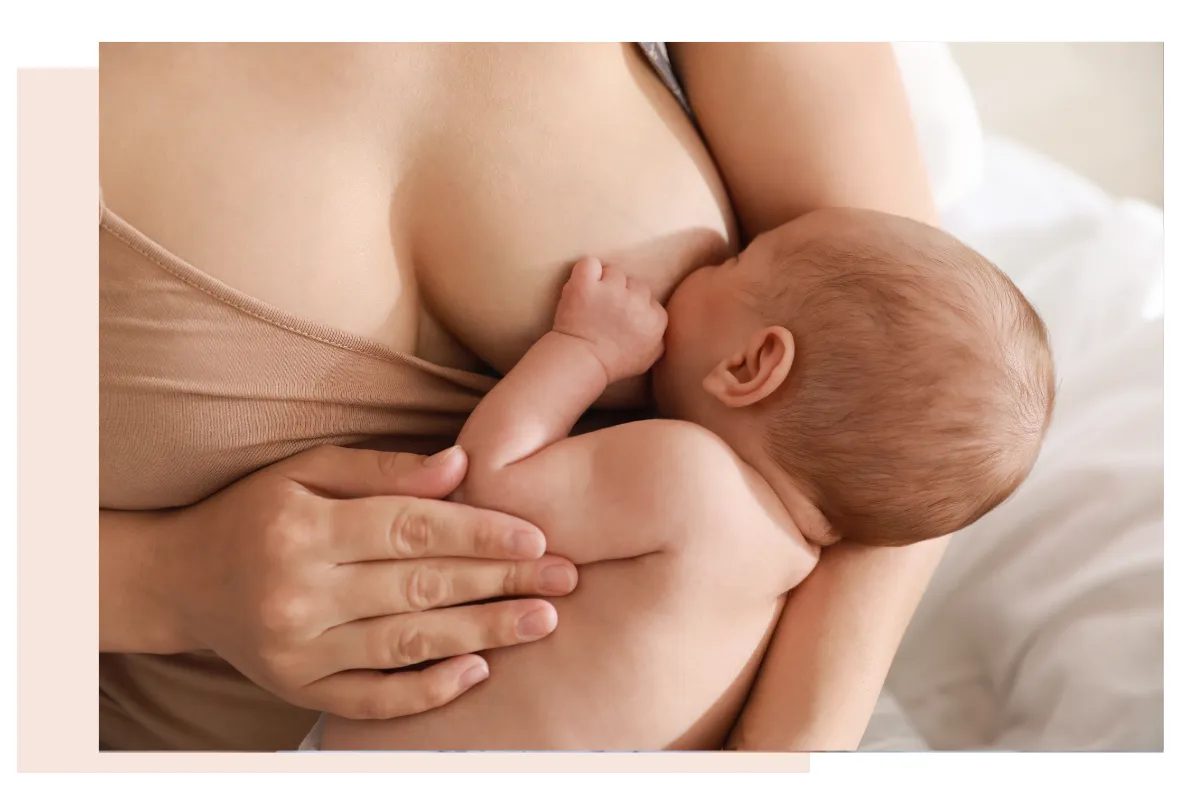
Why Does Breastfeeding Hurt Even When the Latch Looks Good?
Why Does Breastfeeding Hurt Even When the Latch Looks Good?
You've been told the latch looks great. So why does it still hurt?
This is one of the most frustrating breastfeeding problems because a latch can look perfectly reasonable from the outside while your nipples are telling you a completely different story. If breastfeeding continues to hurt, something deserves another look. “The latch looks fine” isn't the end of the investigation.
A good-looking latch isn't necessarily a comfortable latch
We tend to talk about breastfeeding pain as though latch is a single moment: baby opens wide, goes onto the breast, lips look right... tick. But a breastfeed isn't a photograph.
Your baby has to stay attached, manage your milk flow, move their tongue and jaw, maintain their position and continue feeding as the breast changes. So I'm interested in what happens after your baby latches too. Does your baby stay comfortably attached? Pull backwards? Slip shallower? Clamp or grip? Come on and off repeatedly? Does the pain improve after the first few sucks or continue throughout the feed?
Those patterns can tell us far more than simply looking at the latch at the beginning.
Sometimes mum and baby don't fit together easily
You and your baby are two individual pieces of the breastfeeding puzzle. Your breast and nipple anatomy are individual. Your baby's mouth, size, palate, tongue and feeding behaviour are individual too. Sometimes those two pieces fit together easily. Sometimes they don't, particularly at first.
This is one of the reasons I created MumBo™ — the Mum and Baby Combination. Within the Miskin Method®, we don't look at a nipple, latch or baby in isolation. We look at the combination that's actually doing the feeding.
Milk flow can change the latch
A baby dealing with a very fast flow may change how they use their mouth or repeatedly come away from the breast. A baby working hard for milk may behave differently again. What initially looked like a lovely latch can therefore change as the feed progresses.
That's why comments such as “she's impatient” or “he's just greedy” aren't particularly useful to me. I'd rather ask: what is the baby responding to? Because behaviour is information.
Why nipple cream may help... but not solve the problem
When nipples are sore, of course we want to help them heal and make mum more comfortable. But there's another question we need to ask: why are they becoming sore?
If the same feeding pattern continues to create friction, compression or repeated strain, treating the nipple alone may give temporary relief without addressing what's happening during the feed. That's when mums can end up in the maddening cycle of healing... feeding... hurting... healing... hurting again.
The nipple isn't necessarily the problem. It may be showing us the problem.
The Comfortable Pillar is telling us something
Within my 4 Pillars of Breastfeeding Mastery™, the first question here is whether breastfeeding is Comfortable. Not whether somebody else thinks it looks comfortable. Whether it actually is.
Rather than immediately reaching for another universal latch technique, I want to understand the wider pattern: what's happening at the beginning of the feed, what happens once milk starts flowing, whether baby's position changes, when the nipple hurts, what it looks like after the feed and whether anything else is happening alongside the pain.
That gives us something much more useful than “your latch looks fine”.
So why does breastfeeding hurt when the latch looks good?
Because what a latch looks like is only one part of what determines whether breastfeeding is comfortable. Your anatomy, your baby's anatomy, positioning, milk flow and what happens throughout the feed can all change the experience.
You don't need to diagnose the cause yourself. But persistent pain deserves to be understood in the context of you, your baby and the whole feed. If you're being told everything looks fine while your nipples are telling you otherwise, don't ignore the information your body is giving you. Let's get curious about the mismatch.
Persistent or worsening nipple pain, damaged or infected-looking nipples, fever or feeling unwell should also be assessed appropriately rather than relying on online guidance alone.
I’m Geraldine Miskin, breastfeeding specialist, originator of MumBo™ and the 4 Pillars of Breastfeeding Mastery™, and creator of the Miskin Method® and LATCHED AI. Within LATCHED AI, Athena supports mums working through breastfeeding problems such as persistent sore nipples by helping them organise the pattern, understand what may need attention and recognise when personalised assessment is needed.
About LATCHED AI: LATCHED AI is a personalised breastfeeding education and support platform created by Geraldine Miskin. Built on the Miskin Method®, MumBo™ and the 4 Pillars of Breastfeeding Mastery™, it combines nearly 30 years of professional breastfeeding experience with personalised AI support to help families better understand their own breastfeeding.


